
Celestron 130EQ Telescope Review: Three Versions Tested
Affiliate disclosure: Some links on this page are affiliate links. If you buy through them we earn a small commission at no extra cost to you. Recommendations are research-driven; we don't claim personal use of every product reviewed. Product prices and availability are accurate as of the date published and are subject to change. Always check Amazon for current pricing before purchasing. Learn more.
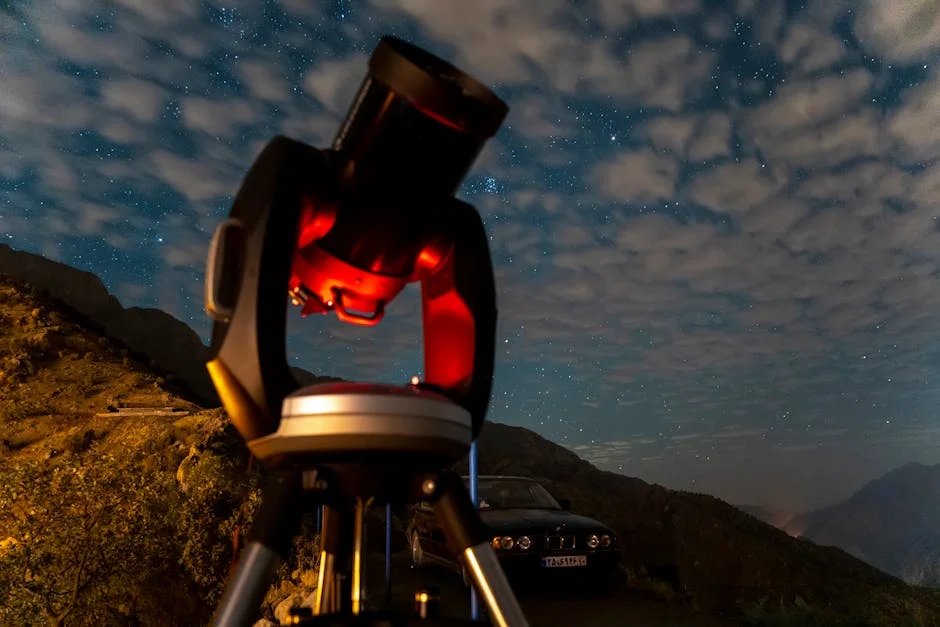
130mm aluminized mirror provides good light gathering for beginners
See Celestron – AstroMaster 130EQ Newtoni… on AmazonMost beginners searching for a 130mm reflector are trying to solve the same problem: enough aperture to see something real, without a mount that requires an engineering degree to operate. The telescope celestron 130eq platform is a reasonable answer to that problem , three distinct versions of the same optical formula, each making a different compromise between cost, convenience, and control. The full range of telescopes worth considering at this aperture is wider than most buyers realize, but these three cover the core decision space well.
The 130mm Newtonian reflector is a solid starting point for visual astronomy. What separates these three versions isn’t the optics , it’s how you interact with the sky once the tube is pointed roughly in the right direction.
What to Look For in a 130mm Beginner Reflector
Aperture and Optical Quality
Aperture is the single most important variable in a visual telescope. More aperture means more light-gathering, which translates directly to brighter images, more detail on extended objects like nebulae, and the ability to resolve fainter stars. At 130mm, you’re working with enough aperture to show the Orion Nebula’s core structure clearly, split most double stars, and resolve the brighter Messier globular clusters into individual stars at the edges.
What matters as much as raw aperture is the quality of the mirror coating. Aluminized mirrors are standard across this class; the question is whether the coating is properly applied and whether the mirror arrives accurately figured. A poorly figured mirror at 130mm will underperform a well-figured 114mm. At this price band, variance in unit-to-unit quality is real, and it’s worth knowing that collimation , the alignment of primary and secondary mirrors , has a significant effect on how well the optical system actually performs.
Mount Type and Tracking
The equatorial mount is misunderstood by most beginners and undersold by most manufacturers. It isn’t just a tripod , it’s a mount that can be aligned to Earth’s rotational axis, after which a single slow-motion control keeps an object centered as the sky rotates. The manual EQ mount requires learning polar alignment, which takes one session to understand and five minutes to execute once you know what you’re doing.
An alt-azimuth mount, by contrast, moves in two independent axes , up/down and left/right. It’s intuitive to use without any prior knowledge, but following an object as it moves across the sky requires simultaneous adjustment of both axes, which is awkward at higher magnification. The choice between EQ and alt-az is largely a choice between a short learning curve now versus a meaningful operational advantage later. Browsing the full range of telescope options by mount type before committing is genuinely useful here.
Motor Drives and App Integration
A motor drive on an equatorial mount automates the tracking work that the single slow-motion knob handles manually. Once polar-aligned, a motor drive turns the right ascension axis at the sidereal rate, keeping objects centered without any manual input. This matters most when you’re observing at higher magnification , at 130x or above, objects drift out of the field of view in roughly 30 seconds on a manual mount.
App-enabled systems like the StarSense Explorer solve a different problem: not tracking, but finding. The smartphone dock uses your phone’s camera and accelerometer to calculate exactly where the telescope is pointed, then gives you turn-by-turn directions to any object in a large database. This is meaningfully different from a motor drive , it helps you get on target, but it doesn’t help you stay there once you’ve arrived.
Collimation and Maintenance
Every Newtonian reflector , at any price , will eventually need collimation. The primary mirror and secondary mirror must be aligned relative to each other and to the focuser axis; if they’re not, stars look like comets rather than points. A new telescope may arrive needing only minor adjustment, or it may need a full collimation before it performs properly. A collimation cap or laser collimator costs very little and removes the guesswork from the process. This is not a flaw in the design , it’s a characteristic of the format, and it’s manageable with about fifteen minutes and a clear-headed tutorial. Beginners who treat their first collimation as a mystery often give up on a telescope that would have served them well.
Top Picks
Celestron AstroMaster 130EQ Newtonian Telescope
The Celestron AstroMaster 130EQ is the baseline version of this platform , 130mm aluminized mirror, manual equatorial mount, two eyepieces, and a red-dot finder. Nothing automated, nothing app-dependent. For a buyer who wants to learn how a telescope actually works, this is the right starting point.
The equatorial mount is the key characteristic here. It’s a CG-3 class mount , lightweight, adequate for visual use at this aperture, and sufficient for learning polar alignment and slow-motion tracking. The learning curve is real. Polar alignment requires understanding the relationship between your mount’s polar axis and Polaris, and first-session observers frequently struggle with this. But once it clicks, it provides a controlled, repeatable way to observe that the alt-az versions of this telescope don’t offer.
The optical performance is honest for the price band. The 130mm primary will show the Orion Nebula, Andromeda’s core, and the Pleiades cleanly. Saturn’s rings are visible at the included eyepiece magnifications. Collimation out of the box varies , I’d budget time for a check before the first serious session. This is the telescope recommend to someone who wants a genuine understanding of the hobby rather than a push-button experience.
Check current price on Amazon.
Celestron AstroMaster 130EQ-MD Newtonian Reflector Telescope
The Celestron AstroMaster 130EQ-MD is the manual EQ version with one meaningful addition: a single-axis motor drive on the right ascension axis. The optics are identical to the base 130EQ. The mount is the same CG-3 class equatorial. The difference is that once you’ve completed polar alignment, the motor handles the tracking work automatically.
That single addition changes the observing experience at higher magnification more than most beginners expect. At 130x on a manual mount, you’re nudging the slow-motion control every 20, 30 seconds to keep an object centered. On the MD version, you set the object, step back, and observe without interruption. For planetary work , where you’re spending extended time on Saturn or Jupiter at higher power , this is a genuine operational improvement, not a luxury.
The trade-off is that polar alignment is now a prerequisite rather than an option. The motor tracks on the RA axis, which means it only works correctly when that axis is aligned to the celestial pole. Sloppy polar alignment produces slow drift rather than stable tracking. This isn’t a difficult thing to learn, but it does mean the MD version rewards the buyer who’s willing to invest a session in proper setup.
Check current price on Amazon.
Celestron StarSense Explorer DX 130AZ
The Celestron StarSense Explorer DX 130AZ takes the same 130mm Newtonian optical formula and pairs it with an alt-azimuth mount and a smartphone dock that uses plate-solving to tell you exactly where the telescope is pointed. This is a fundamentally different instrument from the two EQ versions , same aperture, completely different operating philosophy.
The StarSense system works well. You mount your phone in the dock, open the app, and it calculates your telescope’s pointing position by comparing the camera image to a star database. From there, the app gives directional arrows , nudge left, nudge up , until the target is centered. For a beginner with no prior sky knowledge, this removes the most common source of frustration: finding objects in the first place. The Orion Nebula is easy to locate without help; many NGC objects are not.
The alt-azimuth mount means no polar alignment and no motor drive. Tracking is entirely manual, requiring simultaneous adjustment of both axes as objects move across the sky. At low magnification this is manageable; at 100x and above, objects drift noticeably and the two-axis correction becomes genuinely awkward. The StarSense DX 130AZ is the right choice for someone who prioritizes getting on target quickly over staying there efficiently , and who is honest with themselves about how much setup complexity they’re willing to accept.
Check current price on Amazon.
Buying Guide
Who Should Choose the Manual EQ Version?
The base AstroMaster 130EQ suits a buyer who’s willing to invest time in learning fundamental telescope operation. Polar alignment, slow-motion manual tracking, and collimation are skills that transfer to any equatorial telescope you’ll ever own , they’re not proprietary quirks of this instrument. If you plan to stay in this hobby for more than one season, the manual EQ approach builds a foundation that no amount of automation can fully replace. The learning curve is front-loaded, not spread across years of frustration.
This version is also the right answer when budget is a meaningful constraint within the mid-range band. The optical performance is identical to the MD version; the only difference is the absence of the motor drive. If you’re disciplined about polar alignment and patient with manual tracking, the base 130EQ performs at the same optical ceiling as its motorized sibling.
Who Should Add the Motor Drive?
The MD upgrade makes the most sense for planetary observers who expect to spend extended time at higher magnifications. At 150x or above , achievable with a shorter focal length eyepiece and the 130mm primary , manual tracking becomes a constant interruption. The motor drive removes that interruption entirely, letting you observe the detail in Saturn’s Cassini Division or the cloud bands on Jupiter without losing the object every 30 seconds. If your interests run toward the planets rather than wide-field deep-sky sweeping, the motor drive is worth it.
The MD also makes sense for anyone planning to do basic afocal smartphone photography through the eyepiece. Motor drive tracking isn’t precision enough for long-exposure astrophotography, but it keeps an object centered long enough to capture a clean phone snap of the Moon or Saturn , which is what most beginners actually want from astrophotography at this stage.
When Does the StarSense DX 130AZ Make Sense?
The StarSense DX 130AZ is the right telescope when the primary barrier to enjoyment is finding objects rather than tracking them. For a buyer with no prior star-hopping experience who lives under moderately light-polluted suburban skies, the ability to locate any object in seconds , rather than spending 20 minutes star-hopping with a chart , produces immediate, repeatable results. That directional ease keeps beginners engaged through the first critical season when frustration most often leads to giving up.
It’s also the more practical choice for a household where the telescope will be used by multiple people with varying experience levels. The EQ mount with polar alignment and slow-motion controls has a cognitive barrier that the alt-az mount doesn’t. A wider range of telescope designs exists for buyers whose needs are more advanced, but for a shared household instrument at this aperture, the StarSense DX lowers the friction of use meaningfully.
Mount Stability and Tripod Quality
All three telescopes in this class use a lightweight aluminum tripod. At 130mm and the weights involved, the tripod is adequate for visual use but sensitive to vibration. Touching the focuser or nudging the tube introduces oscillations that take several seconds to damp out at high magnification. This is a known characteristic of the platform, not a defect. Observers who set up on soft ground , grass, dirt , typically see worse vibration than those on a concrete pad or hard floor. A basic vibration suppression pad under each tripod leg, or a heavier accessory tray, reduces the problem measurably.
What to Buy Alongside This Telescope
A collimation tool is the most important accessory purchase at this aperture. A simple collimation cap , a plastic cap with a pinhole center that replaces the eyepiece , costs very little and makes checking mirror alignment straightforward. A laser collimator is more expensive but faster to use. Either is sufficient for a beginner. A quality eyepiece in the 6, 9mm range will also extend the useful magnification of any of these telescopes beyond what the included accessories provide, particularly for planetary work. Ed Ting’s eyepiece reviews at scopereviews.com remain the clearest reference for this decision at the beginner price band.
Frequently Asked Questions
Do I need to polar align the 130EQ before using it?
Polar alignment is not required to simply look through the telescope, but it is required for the equatorial mount to track correctly. Without it, objects drift out of the field of view as the sky rotates and the slow-motion controls don’t move you in the right directions. For casual low-magnification browsing, you can skip it. For any extended observation above 60x, polar alignment is worth the five to ten minutes it takes.
Is the motor drive on the 130EQ-MD worth the additional cost?
For planetary observing at higher magnifications, yes. The Celestron AstroMaster 130EQ-MD keeps objects centered without manual intervention once polar alignment is complete, which significantly reduces the interruption of following an object across the sky. If your primary interest is low-magnification deep-sky browsing where objects move slowly out of frame, the base manual version is sufficient and the motor drive adds less value.
Can the StarSense Explorer DX 130AZ track objects automatically?
No. The StarSense system is a finding tool, not a tracking system. It uses your smartphone’s camera and plate-solving software to identify where the telescope is pointed and guide you to a target. Once you’re on target, tracking is entirely manual on the alt-azimuth mount.
How often do these reflectors need to be collimated?
A well-cared-for Newtonian reflector may hold collimation for months between sessions if it’s transported carefully and stored without being knocked around. In practice, most observers check collimation at the start of a session using a collimation cap , a 30-second process once you’ve done it a few times. A full recollimation from scratch takes 10, 15 minutes. Transporting the telescope in a vehicle is the most common cause of mirrors shifting out of alignment.
Which version is best for a complete beginner with no astronomy background?
The Celestron StarSense Explorer DX 130AZ removes the most common early frustration for beginners , finding objects in a dark sky with no prior knowledge. If the buyer is willing to invest time in learning polar alignment from the start, the base AstroMaster 130EQ builds better long-term skills. The right answer depends on whether the buyer’s primary barrier is finding objects or tracking them once found.
Celestron – AstroMaster 130EQ Newtonian Telescope – Manual Reflector for Beginners – Aluminized Mirror –: Pros & Cons
- 130mm aluminized mirror provides good light gathering for beginners
- Manual equatorial mount allows precise celestial object tracking
- Manual operation requires learning proper telescope alignment techniques
Where to Buy
Celestron – AstroMaster 130EQ Newtonian Telescope – Manual Reflector for Beginners – Aluminized Mirror –See Celestron – AstroMaster 130EQ Newtoni… on Amazon