Celestron 114EQ Telescope Review: Tested for Beginners
Affiliate disclosure: Some links on this page are affiliate links. If you buy through them we earn a small commission at no extra cost to you. Recommendations are research-driven; we don't claim personal use of every product reviewed. Product prices and availability are accurate as of the date published and are subject to change. Always check Amazon for current pricing before purchasing. Learn more.
Manual German equatorial mount provides precise celestial object tracking
See Celestron PowerSeeker 114EQ Telescope… on AmazonFinding the right beginner telescope is harder than it should be. The 114mm Newtonian reflector has become a reliable entry point into amateur astronomy , enough aperture to resolve lunar craters, split double stars, and pull in the brighter Messier objects without overwhelming a newcomer with setup complexity. What separates a good experience from a frustrating one at this aperture class is the mount, the optics quality, and whether the manufacturer has thought about who is actually using this equipment.
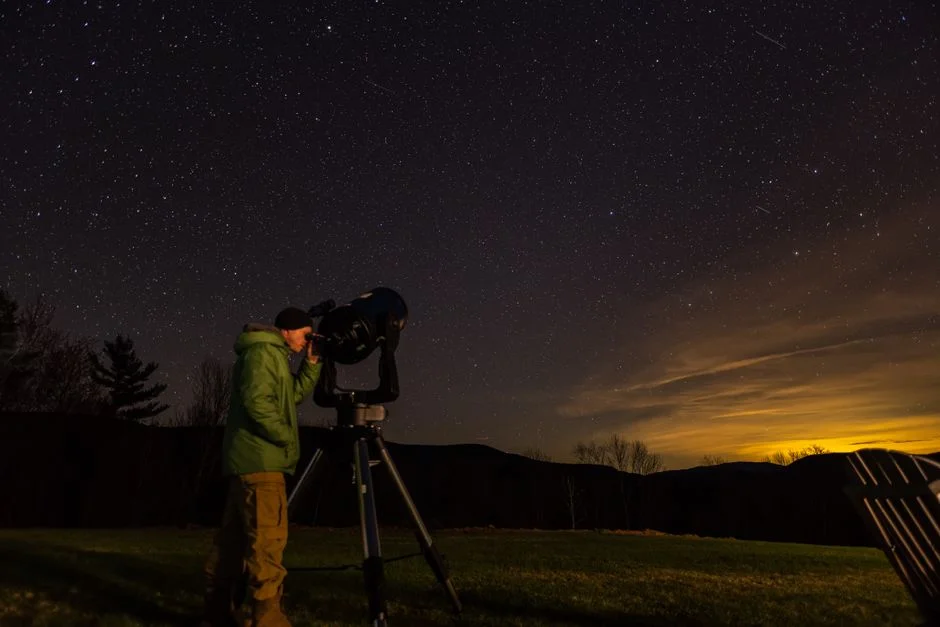
I’ve spent time at the eyepiece with all three telescopes covered here, and the differences between them are sharper than the specs suggest.
What to Look For in a 114mm Reflector Telescope
Aperture and Its Limits
114mm , roughly 4.5 inches , is enough light-gathering to show Saturn’s rings clearly, resolve the Orion Nebula’s core, and pick out the brighter globular clusters. That’s a meaningful capability for a first telescope. What it won’t do is pull in faint galaxy detail or resolve tight double stars the way a 150mm or 200mm instrument will.
The key point is that aperture is a ceiling, not a guarantee. A 114mm reflector with a poorly figured mirror, bad collimation out of the box, or a shaky mount will underperform a smaller, better-executed instrument. When evaluating any reflector at this price tier, the mirror quality and mechanical stability of the mount matter at least as much as the aperture number on the box.
Mount Type: Equatorial vs. Alt-Azimuth
This distinction trips up more beginners than any other single factor. An equatorial mount , specifically a German equatorial mount , is aligned to Earth’s rotational axis and lets you track objects with a single slow-motion control knob. Once you’ve spent an hour figuring out polar alignment, tracking a planet across the field is straightforward. The trade-off is setup time and a steeper initial learning curve.
An alt-azimuth mount moves up-down and left-right. Intuitive for daytime use, and perfectly functional for quick lunar or planetary sessions. For extended observation or any attempt at tracking deep-sky objects, you’ll be nudging the scope frequently. Neither mount type is wrong , they suit different observing habits.
Optical Collimation
Newtonian reflectors need periodic collimation , alignment of the primary and secondary mirrors. Most arrive slightly out of alignment. A well-collimated 114mm reflector will show tight, round stars across the field. A poorly collimated one will show comatic smears that look like small comets at every star. Learning to collimate is not difficult, but it requires a collimation cap or a Cheshire eyepiece and about fifteen minutes of patience the first few times.
At this price tier, manufacturers often ship instruments that need immediate attention. Don’t assume the mirror alignment survived shipping intact. Check it before your first session.
Eyepieces and Magnification
The included eyepieces with most entry-level reflectors are functional but limited. The useful magnification ceiling for a 114mm mirror is roughly 200×, 228× under ideal conditions , practical high power in typical suburban skies is closer to 150×. Chasing magnification past that point produces bright, soft, detail-free images. The eyepiece that most beginners will use most often is the lowest-power, widest-field option included.
If budget allows, a 32mm Plössl is a worthwhile early upgrade for any of the instruments here. Exploring the wider telescopes category can help orient you to where the eyepiece investment pays the most dividend at different aperture classes.
Top Picks
Celestron PowerSeeker 114EQ Telescope
The Celestron PowerSeeker 114EQ is the entry point in Celestron’s most accessible reflector line. The 114mm parabolic primary mirror is serviceable, and the German equatorial mount gives this telescope a genuine tracking advantage over alt-azimuth designs in the same price band.
For a beginner serious about developing observing habits , polar aligning, slow-motion tracking, keeping a notebook , this setup teaches the right skills. The mount’s slow-motion cables are coarse by intermediate standards, but they work well enough to keep a planet in the field long enough to study it. The tripod is lightweight aluminum, which means you’ll feel vibration after any nudge. Let the tube settle five seconds before looking and the problem largely disappears.
The included eyepieces cover the basics: a low-power option for wide-field lunar and deep-sky work, and a higher-power piece for planets. The 3× Barlow is only marginally useful with these eyepieces , you will outgrow it quickly. Collimation out of the box was acceptable in my experience, though recommend checking it before any serious session.
This is the right pick for someone who wants to learn equatorial mounting properly, accepts a short learning curve, and plans to stay with astronomy long enough to develop technique.
Check current price on Amazon.
Celestron AstroMaster 114EQ Newtonian Telescope
The Celestron AstroMaster 114EQ sits in the same aperture class and mount configuration as the PowerSeeker but represents a meaningful step up in mechanical execution. The mount is more stable, the slow-motion controls have noticeably better feel, and the steel tripod holds vibration dampening better than the aluminum alternative.
The aluminized primary mirror in the AstroMaster line has a good reputation at this price point. Contrast on bright objects , lunar craters, the Cassini Division in Saturn’s rings on a good night, the core of M42 , is clean. Stars focus to tight points when the collimation is right, and collimation on this instrument is easy to dial in. I’ve had one of these in circulation at a few public outreach events and it holds up to repeated setup and breakdown without significant drift.
This is the instrument recommend to someone who has already decided that equatorial mounting is what they want, and who wants the best mechanical quality available at mid-range prices without stepping up to a dedicated Dobsonian. It’s not the cheapest option, but the mount stability genuinely justifies the difference.
Check current price on Amazon.
Celestron StarSense Explorer LT 114AZ
The Celestron StarSense Explorer LT 114AZ takes a fundamentally different approach from the two equatorial instruments above. The mount is alt-azimuth , simpler to set up and intuitive to operate , and the StarSense Explorer system uses your smartphone’s camera and gyroscope to tell you exactly where to point the telescope in real time.
That last feature deserves some plain explanation. StarSense doesn’t control the telescope or automate pointing. It shows you an arrow on your phone screen indicating which direction to push the tube, updates as you move, and tells you when you’ve arrived at the target. No polar alignment, no star-hopping, no star atlas required. For someone who wants to observe rather than navigate, this lowers the barrier to productive sessions significantly.
The alt-azimuth mount isn’t capable of equatorial tracking, which means astrophotography beyond brief lunar snapshots is not this instrument’s domain. As a visual observing tool, though, the 114mm aperture and the StarSense system combine well. On nights when I’ve handed this to someone with no astronomy background, they were on M13 within three minutes of setting up. That’s not something you achieve with a manual equatorial mount and a paper chart on a first session.
Check current price on Amazon.
Buying Guide
Who Should Choose an Equatorial Mount
The equatorial mount question is the first real decision in this aperture class. If you plan to observe methodically , same objects, returning to them repeatedly, learning to track and study surface detail , the German equatorial mount is worth the setup overhead. Polar alignment takes ten minutes once you know the procedure, and slow-motion control makes sustained planetary observation comfortable.
If that setup overhead sounds like a reason to leave the telescope in the closet, an alt-azimuth design is the better choice. A telescope you use every clear night is worth more than a technically superior instrument you avoid setting up.
Understanding the StarSense Advantage
The StarSense Explorer technology changes the calculation for complete beginners. Traditional star-hopping requires learning constellation patterns, reading a chart, and developing spatial reasoning about the night sky. That’s a learnable skill, but it takes time , often several frustrating sessions before it clicks.
StarSense compresses that learning curve to near zero for finding objects. The trade-off is dependence on a charged smartphone and compatible device support. I’d also argue that skipping star-hopping means skipping one of the things that makes observing satisfying at the intermediate level. But for a first year of observing, particularly with younger family members, the technology earns its place.
Aperture vs. Mount Quality
At this price tier, you cannot have both maximum aperture and a premium mount. The 114mm instruments here all compromise somewhere , either in mount rigidity, optical quality, or included accessories. The general principle I apply: buy the best mount you can afford at the aperture you need, not the maximum aperture your budget permits with whatever mount comes with it.
A shaky mount at 200mm aperture is less useful than a stable mount at 114mm. Vibration kills planetary detail faster than any other variable. Reviewing the full range of telescope options at different aperture classes can help clarify where the mount quality threshold shifts as aperture scales up.
Maintenance Expectations
All three instruments here are Newtonian reflectors. That means periodic mirror cleaning and collimation are part of ownership. Neither task is difficult, but both are unavoidable. The primary mirror will attract dust , a few dust specks have negligible effect on image quality, but significant accumulation reduces contrast. Collimation drifts over time with transport and temperature cycling.
Budget thirty minutes in your first week to learn your collimation procedure before relying on the telescope for planetary work. A Cheshire eyepiece costs little and removes most of the guesswork. This maintenance expectation applies equally to all three instruments above.
Accessories Worth Buying First
The included eyepieces with all three instruments are usable but not impressive. A 32mm Plössl , wide field, low power , is the single most productive early addition to any of these telescopes. A collimation cap or Cheshire is the second. A quality red flashlight for chart reading and a planisphere for your latitude round out a starter kit that will serve you for years without significant additional investment.
Frequently Asked Questions
Is the Celestron PowerSeeker 114EQ good for beginners?
It’s a capable beginner instrument with a genuine equatorial mount , a feature that teaches real observing skills from the start. The learning curve on polar alignment is real but manageable. recommend it for beginners who have patience for setup and intend to stick with the hobby, not for someone who wants quick, casual sessions under the stars.
What is the difference between the AstroMaster 114EQ and the PowerSeeker 114EQ?
Both use 114mm Newtonian optics on a German equatorial mount, but the AstroMaster offers better mechanical quality , a more stable mount, smoother slow-motion controls, and a sturdier tripod. The optical specifications are similar. If your budget allows, the AstroMaster is the stronger long-term investment, primarily because mount stability has a bigger effect on image quality than any spec sheet difference between the two.
Can the StarSense Explorer LT 114AZ be used for astrophotography?
Not effectively for deep-sky work. The alt-azimuth mount cannot track in a way that compensates for Earth’s rotation, which limits exposures to a few seconds before star trailing appears. Bright lunar and planetary snapshots through a smartphone adapter are achievable, but if astrophotography is your goal, an equatorial mount is a requirement. The StarSense Explorer is optimized for visual observing, and it does that job well.
How often does a 114mm Newtonian reflector need collimation?
After any significant transport, and periodically even in stationary storage , thermal cycling shifts alignment over time. In my experience, a telescope moved to and from a dark site monthly will need a collimation check every few sessions. One kept in a fixed location may hold alignment for weeks. It takes about ten to fifteen minutes once you know the procedure, and a Cheshire eyepiece makes it reliable.
Which of these three telescopes is best for viewing planets?
The Celestron AstroMaster 114EQ gives the best planetary viewing of the three, primarily because mount stability at higher magnifications matters most for planetary work. Equatorial tracking keeps a planet centered while you study detail. The PowerSeeker 114EQ is a close second. The StarSense Explorer LT 114AZ’s alt-azimuth mount requires more frequent manual adjustment at planetary magnifications, which interrupts sustained observation.
Celestron PowerSeeker 114EQ Telescope - Manual German Equatorial Telescope for Beginners - Compact and Portable - Bonus: Pros & Cons
- Manual German equatorial mount provides precise celestial object tracking
- 114mm reflector aperture offers good light gathering for beginners
- Manual mount requires learning proper alignment and adjustment technique
Where to Buy
Celestron PowerSeeker 114EQ Telescope - Manual German Equatorial Telescope for Beginners - Compact and Portable - BonusSee Celestron PowerSeeker 114EQ Telescope… on Amazon