Telescope Finder Buyer's Guide: Red-Dot vs Magnifying

Affiliate disclosure: Some links on this page are affiliate links. If you buy through them we earn a small commission at no extra cost to you. Recommendations are research-driven; we don't claim personal use of every product reviewed. Product prices and availability are accurate as of the date published and are subject to change. Always check Amazon for current pricing before purchasing. Learn more.
Quick Picks
Celestron StarPointer Finderscope
StarPointer red dot technology enables quick target acquisition
Buy on AmazonRed Dot Finderscope - Star Pointer Viewfinder Astronomical Telescope Accessories with Slide-in Bracket
Red dot finder enables quick target acquisition without eyepiece
Buy on AmazonAstromania Red Dot Finderscope for Telescope Deluxe Finder, StarPointer Red Dot Sight Metal Reflex Finder Scope for
Red dot sight design enables quick target acquisition without eyepiece
Buy on Amazon| Product | Price Range | Top Strength | Key Weakness | Buy |
|---|---|---|---|---|
| Celestron StarPointer Finderscope best overall | $$ | StarPointer red dot technology enables quick target acquisition | Red dot finder less precise than magnifying finderscope alternatives | Buy on Amazon |
| Red Dot Finderscope - Star Pointer Viewfinder Astronomical Telescope Accessories with Slide-in Bracket also consider | $$ | Red dot finder enables quick target acquisition without eyepiece | Red dot finders offer less precision than traditional crosshair scopes | Buy on Amazon |
| Astromania Red Dot Finderscope for Telescope Deluxe Finder, StarPointer Red Dot Sight Metal Reflex Finder Scope for also consider | $$ | Red dot sight design enables quick target acquisition without eyepiece | Red dot finders require battery power for illumination | Buy on Amazon |
| Astromania Finder Scope, 9x50 Right Angle Metal Optical Finderscope for Astronomical Telescope with Crosshair and also consider | $$ | 9x50 magnification and aperture provide bright, detailed celestial viewing | Finderscope requires proper alignment with main telescope for accuracy | Buy on Amazon |
| Telrad Finder Sight also consider | $$ | Telrad sight provides wide field of view for locating celestial objects | Red dot finders require battery power for operation and maintenance | Buy on Amazon |
Finding a faint galaxy or a deep-sky cluster starts long before you peer through your main eyepiece , it starts with your finder. A reliable telescope finder lets you orient quickly, star-hop with confidence, and spend more time actually observing instead of hunting. The right tool here is more fundamental than most beginners expect, and it pairs directly with how well your eyepieces perform once you’re on target.
The category splits cleanly into red-dot finders and magnifying finderscopes, and each makes a different trade-off between speed and precision. Knowing which trade-off serves your observing style is the decision this article is built to support.
What to Look For in a Telescope Finder
Finder Type: Red Dot vs. Magnifying Finderscope
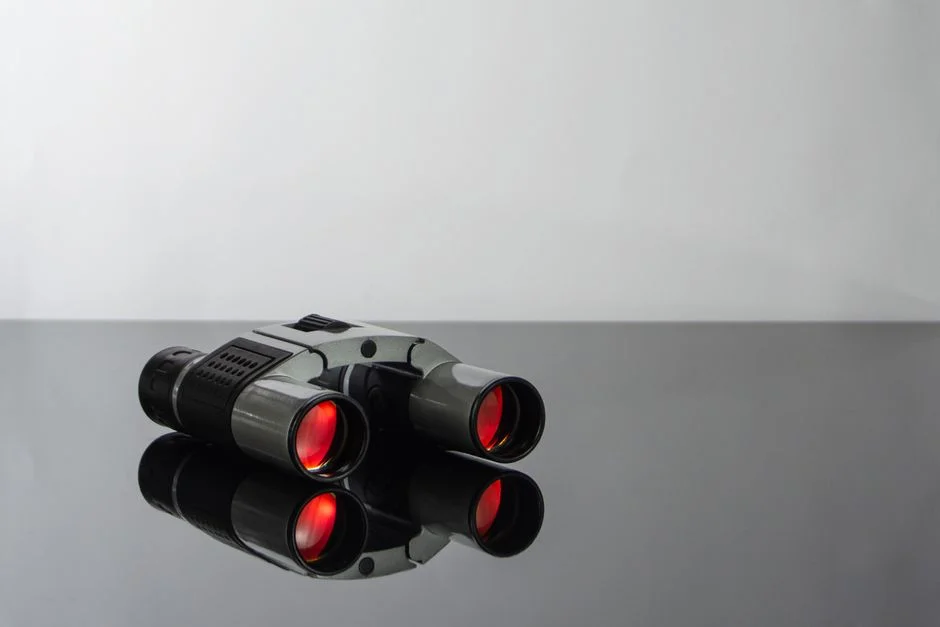
These are not interchangeable tools. A red dot finder , sometimes called a reflex sight , projects a small illuminated reticle onto a lens element. You look through it with both eyes open, see the sky at natural magnification, and place the dot on your target. Setup is fast. The catch is that you’re working at 1× , faint stars that don’t appear to the naked eye won’t appear in the finder, either.
A magnifying finderscope, by contrast, is a small optical telescope. A 9×50 unit, for example, gives nine times magnification through a 50mm aperture. That aperture gathers enough light to show stars several magnitudes fainter than you can see unaided. For star-hopping in dense fields , say, working your way from a bright star to a 10th-magnitude galaxy , that extra detail is what makes the hop possible.
Neither type is categorically superior. Most experienced observers end up with both mounted simultaneously, using the red dot for initial orientation and switching to the magnifying scope for the final approach.
Aperture and Magnification in Magnifying Finderscopes
The first number in a finderscope designation is magnification; the second is aperture in millimeters. A 6×30 is a modest entry-level unit. A 9×50 is a serious instrument , the 50mm aperture pushes the limiting magnitude deep enough to be genuinely useful under suburban skies.
Higher aperture matters more than higher magnification in a finder. An 8×50 will outperform a 12×40 for faint-object work because the larger aperture delivers more light per unit area at the exit pupil. Magnification beyond 10× also amplifies vibration and shrinks the true field of view, which makes it harder, not easier, to confirm your position.
Bracket Compatibility and Mounting
A finder is only useful if it stays put and stays aligned. Finderscopes mount in two broad systems: fixed rings with adjusting screws, and slide-in or dovetail bracket systems. Slide-in brackets allow you to remove the finder for storage and reinstall it in the same alignment , assuming the bracket and shoe are machined to a consistent fit. Fixed ring systems are more common on heavier magnifying scopes and generally hold collimation better under field conditions.
Before buying, verify that the bracket system is compatible with your telescope’s finder shoe. Most modern telescopes use a Vixen-style shoe, but older or budget instruments sometimes use a proprietary mount. Swapping brackets is usually straightforward, but it’s worth confirming before the finder arrives.
Optics Quality and the Right-Angle vs. Straight-Through Decision
In a magnifying finderscope, glass quality matters. A coated objective and quality prism system will show stars as tight points rather than soft blobs, and will transmit enough light that the image doesn’t look murky at the edges. Budget finderscopes often show chromatic aberration , color fringing around bright stars , that makes star-field pattern recognition harder than it should be.
The right-angle vs. straight-through debate is primarily about ergonomics. Right-angle designs use an erecting prism to bend the light path 90 degrees, which makes it possible to look into the finder without craning your neck when the telescope is pointed high. The trade-off is a slightly longer optical path and one additional air-glass surface. For observing near the zenith, the right-angle design is a significant comfort improvement. For near-horizon targets, the straight-through is simpler.
Exploring the full range of telescope accessories, including eyepieces, before settling on a finder configuration is worth the time , the finder and eyepiece system need to work together as a coherent observing strategy.
Top Picks
Telrad Finder Sight
The Telrad Finder Sight has been on Dobsonians and refractors since the 1970s, and it has stayed there because the design is genuinely excellent at what it does. The optical element projects three concentric red rings , 0.5°, 2°, and 4° circles , onto a glass window. Those rings correspond to angular distances on the sky, which means you’re not just placing a dot on a target; you’re reading a coordinate reference that maps directly onto star atlases designed around the Telrad.
I’ve had a Telrad on my Obsession for as long as I’ve owned the scope, and it is the single most useful piece of hardware on that telescope. Star-hopping to a faint NGC object with a Tirion atlas or a printed Telrad chart is faster and more reliable than any GoTo I’ve tested. The field of view is genuinely wide , wider than most red dot competitors , and the rings give you enough angular context to confirm you’re in the right neighborhood before switching to the eyepiece.
The one real limitation is that it’s a 1× device. Very faint targets in fields with sparse naked-eye stars require a follow-up look in a magnifying finder before the main scope. For most deep-sky visual work at dark sites, that limitation rarely bites. The Telrad deserves its reputation.
Check current price on Amazon.
Celestron StarPointer Finderscope
The Celestron StarPointer Finderscope is the factory-installed finder on a large fraction of entry-level Celestron telescopes, which means many observers already own one. As a standalone purchase it’s a competent red-dot unit in a familiar form factor. The mounting bracket uses the standard Celestron/Vixen-compatible shoe, installation takes about sixty seconds, and alignment is done with two adjustment screws that hold reliably once set.
The optical element projects a single red dot rather than the Telrad’s concentric rings, which removes the angular reference that makes star-hopping efficient. For casual bright-object work , finding Saturn, locating the Pleiades, pointing at the Orion Nebula , a single red dot is more than adequate. For systematic deep-sky observing where you’re working from a known star to an invisible target three degrees away, the absence of angular scale is a real handicap.
The Celestron brand backing means replacement parts and support are accessible, and the unit is built to a consistent standard. It is a sensible choice for a beginner building their first telescope kit, or as a backup finder when the primary is removed for storage.
Check current price on Amazon.
Astromania Red Dot Finderscope for Telescope Deluxe Finder
The Astromania Red Dot Finderscope for Telescope Deluxe Finder is a step up from the most basic red-dot units in one measurable way: the metal housing. Most entry-level red-dot finders use plastic shells that flex under adjustment and lose collimation if the scope takes any kind of bump during transport. Metal construction absorbs those small impacts without transmitting them to the bracket interface, which means alignment holds through a night of repositioning.
The reflex sight mechanism is straightforward , a single illuminated dot projected onto a glass element. Brightness is adjustable, which helps in the transition period between twilight and full dark when a maximum-brightness dot can wash out the surrounding star field. For beginners building a toolkit, the durability argument for metal over plastic is genuine, not a marketing distinction. The learning curve for reflex finders is short; within two or three sessions, acquisition becomes fast enough that the 1× limitation is the only remaining constraint.
Check current price on Amazon.
Red Dot Finderscope - Star Pointer Viewfinder
The Red Dot Finderscope - Star Pointer Viewfinder Astronomical Telescope Accessories with Slide-in Bracket is a generic-category option that competes primarily on the convenience of the slide-in bracket system. The bracket allows the finder to be removed from the telescope without tools and reinstalled in the same position, which matters if you’re packing equipment into a case and don’t want finder hardware snagged during transport.
The core red-dot optics are functionally similar to other units in this class. What distinguishes this pick is the mounting system rather than the optical element. If your current finder bracket is damaged or incompatible with an aftermarket scope, the slide-in design here can solve a compatibility problem that other red-dot finders don’t address. As a primary finder for a dedicated observing setup, the Telrad or a magnifying scope is a more capable long-term choice. As a portable option or a second finder for a travel scope, the bracket convenience is a legitimate selling point.
Check current price on Amazon.
Astromania Finder Scope, 9x50 Right Angle Metal Optical Finderscope
The Astromania Finder Scope, 9x50 Right Angle Metal Optical Finderscope for Astronomical Telescope with Crosshair is the only magnifying finderscope in this group, and the specification is serious: 9× magnification through a 50mm aperture with a right-angle prism and an illuminated crosshair reticle. The 50mm objective gathers enough light to push several magnitudes below the naked-eye limit, which changes what’s possible at the finder stage.
I haven’t used this specific unit in the field, but I can read the spec sheet as someone who spent decades evaluating imaging optics. A 50mm multicoated objective in this focal ratio class should give an exit pupil around 5.5mm, which is well-matched to the dark-adapted eye. The right-angle design makes high-altitude targets accessible without the neck-strain that kills sessions with a straight-through scope. The crosshair reticle with illumination is the right choice for a finder at this magnification level , a plain crosshair in a dark field disappears against faint stars.
For observers doing systematic deep-sky work , working through the Herschel 400, hunting faint galaxies in Virgo, completing the Messier list under suburban skies , a 9×50 magnifying scope is not a luxury. It’s the right tool. Pair it with a Telrad for initial orientation and this is a capable two-finder system.
Check current price on Amazon.
Buying Guide
Red Dot Finder or Magnifying Finderscope , Which Do You Actually Need?
The honest answer is that most observers who do regular deep-sky work need both. A red dot finder solves the orientation problem quickly , you can get your telescope pointed in the right general direction in seconds. A magnifying finderscope solves the precision problem , you can confirm exactly which star-hop position you’re at and make the final approach to a faint target with confidence.
If you’re choosing one tool to start, the answer depends on your sky. Under dark skies with many naked-eye stars visible, a red-dot finder and a good star atlas are sufficient for most Messier objects. Under suburban skies where the star field is thin, a 9×50 magnifying scope becomes necessary for anything below fourth or fifth magnitude.
Mounting and Alignment
A finder that won’t hold alignment is worse than no finder , it creates false confidence and sends you to the wrong part of the sky. Before purchasing, identify which bracket system your telescope uses. The most common system is the Vixen-style dovetail shoe, but some manufacturers use proprietary slides. Confirm the finder’s bracket matches before ordering.
Alignment should be done in daylight on a distant terrestrial target, then confirmed on a bright star at night before beginning an observing session. Most mounting rings provide two or three adjustment screws; tighten them in opposing pairs to avoid introducing tilt. Once set on a metal-mounted scope under stable temperature conditions, alignment typically holds for multiple sessions.
Battery Dependence and Practical Maintenance
Every illuminated finder , red dot, Telrad, illuminated reticle , requires batteries. This is not a minor operational detail. A dead finder battery during an observing session means you’re navigating blind until you find a replacement. Carry a spare set for every illuminated finder you own.
Battery life varies significantly between units. The Telrad is known for modest battery draw; some inexpensive red-dot units drain batteries in a single long session at high brightness. Using the lowest brightness setting that remains visible against the sky background extends battery life and reduces the washout effect on dark-adapted eyes.
Field of View and Its Role in Star-Hopping
Star-hopping is the technique of navigating from a known bright star to an unknown faint target by following a chain of intermediate stars. The technique works because the finder shows a field wide enough to see several stars simultaneously, allowing you to confirm pattern matches against a chart.
A wider true field of view in the finder makes star-hopping easier, particularly in sparse fields. The Telrad’s concentric rings span four degrees at the outer circle. A 9×50 finderscope at typical focal lengths gives roughly five to six degrees of true field, enough to show a useful star pattern. Exploring your options across eyepieces and finder accessories as a system , rather than optimizing each piece in isolation , will save you time and money.
When to Use Two Finders Simultaneously
Running a red-dot finder and a magnifying finderscope together is not redundant , it is the most efficient deep-sky observing configuration available on a manual telescope. The red dot handles coarse pointing in two or three seconds. The magnifying scope handles fine confirmation before you commit to the main telescope. Many experienced observers add a third aid: a printed Telrad chart or a digital atlas that shows the expected star field at the finder’s field of view.
The weight addition from a second finder is minimal, particularly on a Dobsonian rocker box where balance is less critical than on a German equatorial mount. On a GEM, adding weight to the optical tube means adding counterweight, so the tradeoff is more practical. For visual observers on Dobsonians, there is no reason not to run both.
Frequently Asked Questions
What is the difference between a red dot finder and a magnifying finderscope?
A red dot finder projects an illuminated dot onto a glass element at 1× magnification, letting you look through it with both eyes open at natural scale. A magnifying finderscope is a small optical telescope , typically 6×30 to 9×50 , that amplifies the star field and shows stars fainter than the naked eye can detect. Red dot finders are faster to use; magnifying finderscopes are more precise for faint or crowded targets. Most experienced deep-sky observers use both together.
Is the Telrad Finder Sight compatible with all telescopes?
The Telrad mounts on a flat adhesive base that attaches directly to the telescope tube , it does not use a dovetail shoe system. This means it is compatible with virtually any telescope, including telescopes with non-standard or proprietary finder shoes. The base plate uses a mild adhesive that is repositionable; most users add a small base pad or Velcro strip to allow removal without surface damage. No additional bracket hardware is required.
Can I use a 9x50 finderscope on a beginner telescope?
Yes, with one practical note: the mounting rings on a 9×50 are physically larger than those on a 6×30, and some budget telescopes have finder shoes positioned close to other hardware, limiting clearance. Confirm the tube clearance on your specific telescope before ordering. The optical benefit of a 9×50 over a smaller finderscope is substantial , the 50mm aperture shows stars several magnitudes fainter , and the investment is worthwhile on any telescope you plan to use seriously.
How do I keep a finderscope aligned with my main telescope?
Align the finder in daylight on a distant terrestrial target at least 200 meters away. Center the target in the main telescope at low power, then adjust the finder’s mounting screws until the target is centered in the finder as well. Confirm on a bright star at night before your session begins. Metal mounting rings hold alignment better than plastic over temperature changes.
Do I need both a Telrad and a separate red dot finder, or will one suffice?
For most observers, one red-dot-style finder is sufficient for casual observing of bright objects. The Telrad’s advantage over a standard single-dot finder is the concentric ring system, which gives angular scale for star-hopping and maps directly onto Telrad-specific star charts. If you do systematic deep-sky work , working through a catalog, hunting specific objects in faint fields , the angular reference of the Telrad combined with a 9×50 magnifying scope is a significantly more capable system than a single red dot alone.
Where to Buy
Celestron StarPointer FinderscopeSee Celestron StarPointer Finderscope on Amazon