Best Tripod Heads for Seestar S50: Reviewed and Tested

Affiliate disclosure: Some links on this page are affiliate links. If you buy through them we earn a small commission at no extra cost to you. Recommendations are research-driven; we don't claim personal use of every product reviewed. Product prices and availability are accurate as of the date published and are subject to change. Always check Amazon for current pricing before purchasing. Learn more.
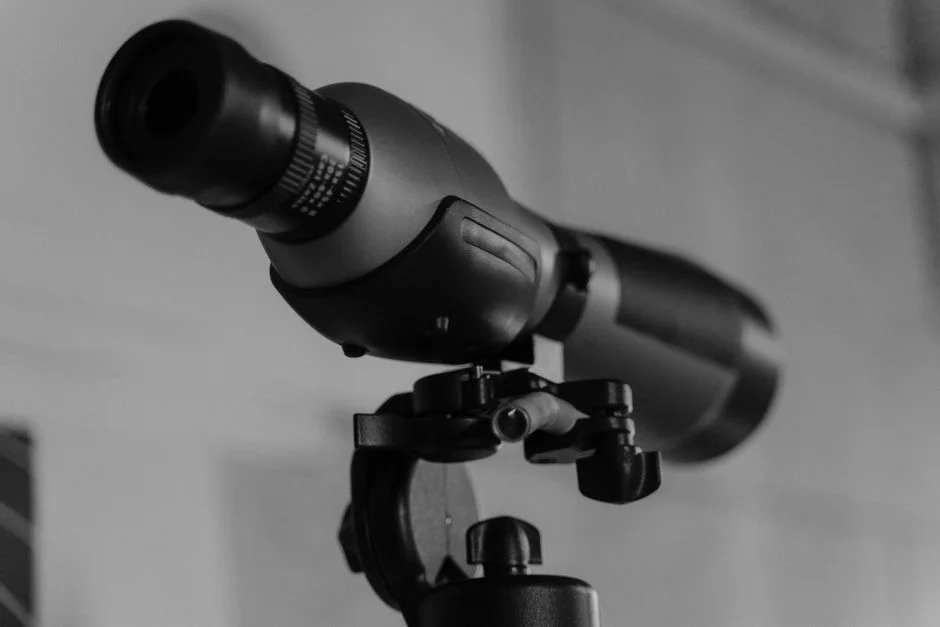
Precision +/-5 degree adjustment bracket enables accurate leveling
See Tripod Leveler Stand with +/-5 Degree… on AmazonMounting a smart telescope sounds simple until you try to level it on uneven ground at 10 PM with dew forming on your eyepieces. The Seestar S50 is capable enough that the mount underneath it becomes the limiting factor fast , and not every tripod head is built for the demands of telescope work. These three options represent the meaningful range of what’s available for this application.
The differences matter more than they appear on paper. A fluid head designed specifically for equatorial tracking behaves differently than a leveling bracket or a general-purpose video head, and choosing wrong wastes the telescope’s alignment routine every session.
What to Look For in a Seestar S50 Tripod Head
Leveling Precision and Its Practical Consequences
The Seestar S50 runs its own internal leveling algorithm, but it has limits. Feed it a base that’s more than a few degrees off and you’re asking the software to compensate for a mechanical problem , the alignment takes longer, polar alignment degrades, and tracking errors compound across a long imaging session. A dedicated leveling mechanism with measurable adjustment range is worth the added mass.
What “precision” means here is specific: you want angular resolution fine enough to dial in within a degree or two without rocking the head back and forth chasing a bubble. A coarse adjustment system that snaps between positions rather than turning smoothly is a friction source, not a feature.
Motion Smoothness for Equatorial Mode
The S50’s equatorial mode depends on controlled axis rotation, not free-swinging adjustment. A fluid head with damped motion holds position across temperature changes and doesn’t drift once locked. Dry pivot heads , even stiff ones , tend to creep under load or vibrate when tracking motor torque shifts direction.
Fluid damping also matters during repositioning between targets. Jerky motion on a mount this sensitive can knock the internal IMU reading enough to require re-leveling. One smooth repositioning motion is better than three careful micro-corrections.
Payload Rating and Thread Compatibility
The S50 weighs roughly 2.6 kg fully assembled with a phone attached. That sounds modest, but you want a head rated to at least twice the payload for stability , the stiffness curve on most consumer tripod heads drops sharply near the rated limit, not at it. A head rated to 5, 6 kg gives you meaningful stiffness margin.
Thread compatibility on the mounting interface matters too. Most tripod heads use a 3/8”-16 male stud or a flat Arca Swiss plate interface. The S50’s base accepts standard tripod threading, but verify the head’s output thread matches your tripod’s platform before ordering. Exploring the broader range of telescope mounts and accessories before committing to a specific interface standard is time well spent.
Quick-Release System and Field Workflow
At a dark site, you don’t want to be threading a screw connection in the dark with cold hands. A quick-release plate system , Arca Swiss standard being the most interoperable , lets you pull the telescope on and off in seconds without disturbing the leveling adjustment you set during daylight.
The tradeoff is that QR plates add a small amount of rocking compliance if they’re worn or not fully engaged. Inspect the plate engagement before each session, and avoid aftermarket plates that don’t match the clamp geometry exactly.
Top Picks
Tripod Leveler Stand with +/-5 Degree Precision Adjustment Bracket
The Tripod Leveler Stand with +/-5 Degree Precision Adjustment Bracket addresses the most basic problem the S50 encounters in the field: an uneven surface that the internal algorithm can’t fully correct. The +/-5 degree adjustment range covers the realistic envelope of most terrestrial observing sites , patchy grass, sloped concrete pads, gravel drives , without requiring you to shim the tripod feet individually.
What distinguishes this from a generic leveling ball is that the adjustment bracket is designed for the torque loads of telescope equipment, not just camera gear. Camera levelers tend to be optimized for vertical loads at the center of gravity , a telescope arm extends that load off-axis, and a leveler not built for that geometry will drift under motor slew loads. The manual adjustment here is deliberate: you set it, lock it, and it stays.
The limitation is that manual dialing requires patience. You’re adjusting a mechanical angle, not watching a digital inclinometer. A bubble level taped to the S50’s base is a practical addition. The system is not designed for quick repositioning , if you’re moving between sites frequently in a single night, the setup time is a real cost.
Check current price on Amazon.
ZWO Seestar Fluid Tripod Head TH10
The ZWO Seestar Fluid Tripod Head TH10 is the head ZWO built specifically for this telescope, which is either a recommendation or a constraint depending on how you look at it. Purpose-built means the mechanical interface, payload rating, and damping characteristics were engineered around the S50’s mass distribution and equatorial mode motion profile , not approximated from a camera video head and declared compatible.
The 360° pan and ±90° tilt range give you full repositioning freedom without having to break the leveling adjustment. Fluid heads in general offer damped motion that resists the micro-vibrations that plague telescope imaging , the S50’s internal sensor stack is sensitive enough that ground vibration from foot traffic or wind loading will appear in a 10-second exposure if the head underneath is rigid steel with no damping medium. The TH10’s fluid cartridge addresses this at the source.
The maintenance requirement is real. Fluid damping systems require periodic inspection , the damping medium can thin out in high heat or thicken in cold, changing the feel and the effective stiffness. For a dedicated astronomy setup that lives in a temperature-controlled environment, this is minor. For a head that rides in a vehicle and operates between 40°F and 90°F across seasons, plan on seasonal inspection at minimum.
Check current price on Amazon.
INNOREL Tripod Fluid Head Pan Tilt Head
The INNOREL Tripod Fluid Head is the generalist option , a small metal fluid head designed for video work that happens to function adequately for compact smart telescope mounting. The dual Arca Swiss quick-release plates are a practical inclusion: one stays on the telescope, one stays on the camera if you’re switching between imaging applications, and you don’t have to re-plate every session.
Metal construction at this price band is not always a given, and it matters for thermal stability. Polymer-body heads flex with temperature changes in ways that introduce pointing drift you can’t distinguish from tracking error without careful testing. A metal-body head holds its geometry more consistently through the night.
The honest limitation is payload capacity. The mini form factor is suited to cameras in the 1, 2 kg range, and the S50 at 2.6 kg pushes into the range where stiffness degrades noticeably. Under calm conditions with no wind, this head performs adequately. In any meaningful wind loading, or on a surface with perceptible vibration, the reduced stiffness at the S50’s weight shows up as elongated stars in longer exposures. It’s a workable option if your observing conditions are consistently calm and you’re already in the Arca Swiss ecosystem.
Check current price on Amazon.
Buying Guide
Purpose-Built vs. Adapted Hardware
The TH10 exists because ZWO recognized that no existing video or photography head was optimized for the S50’s specific requirements. Purpose-built hardware usually wins in precision applications, but it comes with a narrower resale path and a dependency on the manufacturer’s continued production. If ZWO discontinues the TH10, spare parts and replacement damping cartridges become harder to source. That’s a real consideration for equipment you plan to use for a decade.
Adapted hardware , a leveling bracket or a general-purpose fluid head , is more replaceable and often compatible with other equipment you already own. The tradeoff is that you’re accepting some performance compromise relative to a purpose-designed solution.
Temperature Range and Seasonal Use
Fluid damping characteristics change with temperature. A head that feels ideal at 65°F may feel stiff at 35°F or loose at 85°F. If your observing season spans a wide temperature range , which it does in most of the continental US , check the manufacturer’s specified operating temperature range against your typical conditions.
The leveling bracket is immune to this concern. Mechanical adjustment systems don’t have fluid to thicken or thin. For cold-climate observers who operate regularly below freezing, a mechanical leveler paired with a separate stiff pan head may outperform a fluid head whose damping medium has thickened to near-solid.
Quick-Release Compatibility in the Field
Arca Swiss has become the de facto standard for telescope and camera quick-release systems, but the standard has significant variance in clamp jaw width and plate dovetail angle. Before buying any QR-based head, verify that the clamp opening dimension matches the plate width the S50 ships with or the plate you’ve already sourced.
The INNOREL includes two plates, which reduces that friction for new buyers. The TH10’s interface is designed around ZWO’s own mounting standard. If you’re building a system that mixes brands , tripod from one source, head from another, accessories from a third , verifying interface compatibility before ordering saves a return cycle. The telescope accessories and mounts section of this site covers compatible hardware in more detail.
Stability Margin and Payload Headroom
Buying exactly to the rated payload is a mistake with tripod heads. The stiffness rating at 100% of rated load is substantially lower than at 50, 60%. For the S50 at 2.6 kg, a head rated to 5 kg or more provides the stiffness margin that keeps stars round on a 15-second sub-frame. A head rated to 3 kg at the same load is operating near its compliance limit.
This matters most in fluid heads, where the damping mechanism itself introduces some compliance. Mechanical heads are stiffer at load but don’t damp vibration. The right answer depends on your observing conditions and how much wind loading your site typically produces.
Collimation and Re-Leveling Frequency
A head that requires re-leveling every time you reposition costs you observing time. The S50’s internal leveling check is fast, but it’s not instantaneous , and if you’re running equatorial mode for long sequences, a drift in the leveling state mid-session means a full re-initialization. Heads with positive locking mechanisms , where locked means locked, not “locked enough” , pay for themselves in session continuity.
The leveling bracket with its precision adjustment screw is designed for this: set once, lock, observe. The fluid heads require locking every axis independently after each repositioning. Build the locking habit into your setup routine before your first session, not after you’ve lost a target.
Frequently Asked Questions
Does the Seestar S50 require a specialized tripod head, or will any ball head work?
The S50 will technically mount to any standard ball head with the correct thread pitch, but general-purpose ball heads are not designed for the S50’s combination of extended lever arm, equatorial mode rotation, and sensitivity to vibration. A head purpose-built for telescope work , or one with sufficient payload headroom and positive locking , will produce meaningfully better tracking results than a compact photography ball head operating at or near its rated load.
What is the difference between the TH10 and the leveling bracket for S50 use?
The TH10 is a full fluid tripod head that replaces your existing head, providing damped panning and tilting motion optimized for the S50’s equatorial tracking mode. The leveling bracket is an add-on that sits between your existing tripod head and the S50, correcting for ground slope without replacing the head underneath. They solve different problems , the TH10 provides damping and full motion control; the bracket provides precision leveling on top of whatever head you already have.
Can I use the INNOREL head for deep-sky imaging with the Seestar S50?
Under calm conditions with minimal wind loading, the INNOREL head can support the S50 adequately for shorter sub-frame exposures. At the S50’s weight of roughly 2.6 kg, this mini head is operating near its practical stiffness limit, which shows up as elongated stars in longer exposures or when any ground vibration is present. It’s a reasonable option for casual use or travel where packability matters, but the TH10 or a higher-payload head will produce more consistent imaging results.
How do I know if a tripod head is compatible with my existing tripod?
Check the output thread on the tripod head , most heads use a 3/8”-16 male stud that accepts a standard tripod platform. Many tripods ship with a 1/4”-20 to 3/8”-16 adapter bushing. If your tripod has an Arca Swiss platform rather than a threaded post, you’ll need a head with a matching flat base rather than a threaded stud. Verify both the top interface (to the S50) and the bottom interface (to the tripod) before ordering.
Is fluid head maintenance difficult for an amateur?
Fluid head maintenance at the user level typically means inspecting the damping feel seasonally, keeping the mechanism clean of dust and grit, and storing the head in a temperature-stable environment between sessions. The damping cartridge itself is generally a sealed unit and not user-serviceable without manufacturer support. Most users go years without any maintenance beyond cleaning. If the damping feel changes noticeably , getting stiff in cold or loose in heat , contact the manufacturer before attempting any disassembly.
Tripod Leveler Stand with +/-5 Degree Precision Adjustment Bracket for Seestar s50/Panoramic Head Ball Head Video Head: Pros & Cons
- Precision +/-5 degree adjustment bracket enables accurate leveling
- Compatible with Seestar S50 and panoramic/ball head systems
- Manual adjustment bracket requires careful dialing for precision
Where to Buy
Tripod Leveler Stand with +/-5 Degree Precision Adjustment Bracket for Seestar s50/Panoramic Head Ball Head Video HeadSee Tripod Leveler Stand with +/-5 Degree… on Amazon