10x50 Binoculars for Astronomy: A Practical Review
Affiliate disclosure: Some links on this page are affiliate links. If you buy through them we earn a small commission at no extra cost to you. Recommendations are research-driven; we don't claim personal use of every product reviewed. Product prices and availability are accurate as of the date published and are subject to change. Always check Amazon for current pricing before purchasing. Learn more.

10x50 magnification offers high-powered viewing for distant subjects
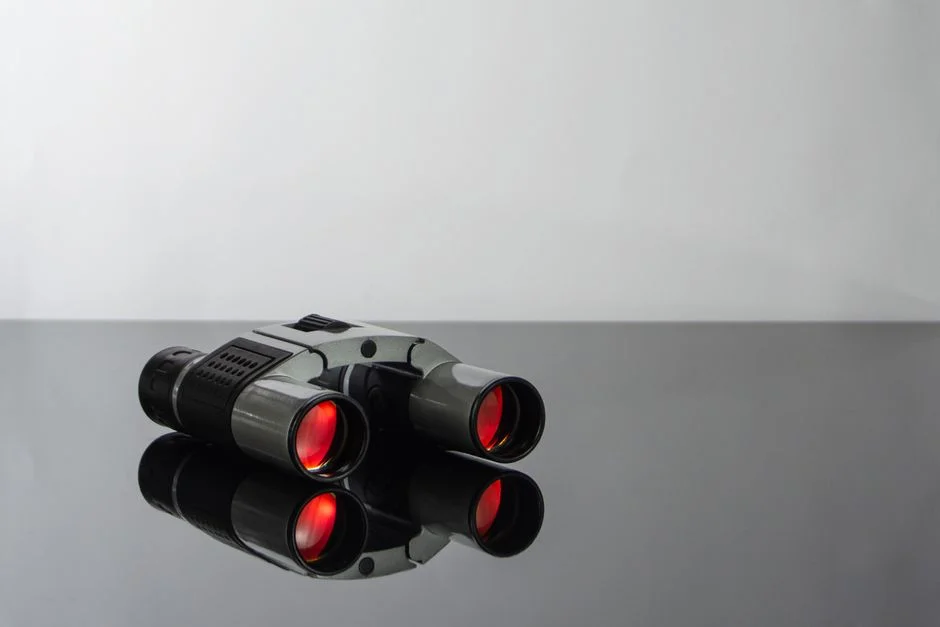
See Sogries 10x50 Binoculars for Adults H… on Amazon10x50 binoculars occupy a specific and useful position in the astronomy toolkit , enough aperture to pull in genuine light, enough magnification to resolve structure in open clusters and locate fainter Messier objects, and enough portability to actually bring to a dark site. They are not a substitute for a telescope. But I’ve used mine at the Salinas Pueblo dark sky site more times than I can count, and there are nights when the wide-field sweep of a good pair of binoculars shows you more of the Milky Way than any eyepiece will.
Choosing the right pair takes more than matching a spec sheet. Prism type, coatings, optical alignment, and exit pupil all matter in ways that aren’t obvious from the listing. I’ll cover what to evaluate before you buy, then walk through three options at different points in the mid-range , from a budget-accessible entry to an established optics brand worth the price bump.
What to Look For in 10x50 Astronomy Binoculars
Aperture and Exit Pupil
The “50” in 10x50 refers to the diameter of the objective lenses in millimeters. For astronomy, aperture determines how much light the instrument collects , the same principle that governs telescope sizing. A 50mm objective is genuinely useful under a dark sky. It collects roughly 50 times more light than your dark-adapted eye.
Exit pupil is aperture divided by magnification , for a 10x50, that’s 5mm. A healthy dark-adapted eye dilates to about 6, 7mm, so a 5mm exit pupil works comfortably for most adult observers. It leaves a small margin, which means you won’t see fully dark-sky-limited performance the way a 7x50 would deliver, but you gain sharpness at the cost of some low-light headroom.
Prism Design: Porro vs. Roof
The two dominant prism designs handle the optical path differently and have real consequences for image quality at a given price. Porro prism binoculars , identifiable by their offset barrel geometry , achieve excellent light transmission without requiring the tight tolerances that roof prism designs demand. At equivalent price points, a porro prism instrument typically delivers better contrast and cleaner edge correction.
Roof prism binoculars are more compact and handle physical stress better, but they require phase-correction coatings to match a porro prism’s contrast at the same price. Below premium territory, a porro prism design will generally outperform a roof prism on optical merit alone. For astronomy, where contrast and light transmission matter more than pocket-sized portability, this distinction is worth understanding before you shop.
Coatings and Glass Quality
The coating spec on a budget binocular is often the first place a manufacturer cuts costs. “Coated” means one surface has some form of anti-reflection treatment. “Fully multi-coated” means every air-to-glass surface has multiple layers , the standard you want for astronomy.
BAK-4 glass is the preferred prism material over BK-7. BAK-4 yields a circular, evenly illuminated exit pupil when you hold the binoculars at arm’s length and look at the eyepiece. BK-7 produces a slightly squared-off exit pupil, which means some light is being cut. It’s a quick field test you can perform before buying if you’re shopping in a store. For the full range of binoculars across price tiers , not just the 10x50 format , understanding this spec will serve you at any aperture.
Optical Alignment and Build Quality
Collimation , the alignment of the two optical paths , matters more in binoculars than many buyers realize. Misaligned optics force your eyes to converge or diverge to merge the two images, which produces eye strain and headaches during extended sessions. A well-collimated instrument lets your eyes relax naturally.
Waterproofing is worth having even if you primarily observe in dry climates. Nitrogen or argon purging prevents internal fogging when temperature drops rapidly , which happens routinely at dark sites when the ground cools after sunset. It also protects the sealed interior from dust accumulation over years of use.
Top Picks
Celestron Outland X 10x50 Binoculars
The Celestron Outland X 10x50 is the pick I’d direct most astronomy beginners toward. Celestron has built and sold optics to amateur astronomers for decades, and that institutional knowledge shows in how this instrument is specced. The 50mm objectives are fully multi-coated, the prisms are BAK-4, and the build is nitrogen-purged for waterproofing and fog resistance , all specs that budget alternatives often skip.
The 5.6° field of view is serviceable for astronomy, though not generous. You can fit the entirety of the Orion Sword region in a single view, and sweeping along the Milky Way core is genuinely rewarding. The 10x magnification at this aperture is stable enough for seated or elbow-braced observation, though tripod mounting becomes worthwhile during any extended session.
The weight is honest for what the optics require. Fifty-millimeter objectives need a housing that holds collimation, and that means you’re carrying something more substantial than compact roof-prism travel binoculars. That tradeoff is reasonable given the optical return.
Check current price on Amazon.
Bushnell Falcon 10x50 Wide-Angle Binoculars
The Bushnell Falcon 10x50 is a porro prism instrument, and that design choice is its primary distinction from the Celestron. Porro prism geometry gives it a slightly wider apparent spatial impression , the depth and three-dimensionality that porro users tend to describe when comparing against roof prism instruments. For sweeping rich-field targets like open clusters or large nebula complexes, that impression is real and useful.
The InstaFocus mechanism , a center focus wheel with a short throw and snappy engagement , is practical for observers who shift between targets at different angular distances. It won’t matter much for pure astronomy sessions where you set focus on a distant star and leave it, but it’s a nice feature if you’re using these during the day as well as at night.
BK-7 prism glass is the main optical caveat here. It’s serviceable, and at this price band it’s a common compromise. The squared-off exit pupil is a minor optical inefficiency rather than a deal-breaker. Contrast holds up well for a budget porro design, and Bushnell’s manufacturing quality control is consistent enough that you’re unlikely to receive a grossly misaligned unit.
recommend these for buyers who want to try porro prism performance without a large outlay, and who are willing to accept BK-7 glass as the cost of entry.
Check current price on Amazon.
Sogries 10x50 Binoculars
The Sogries 10x50 lands in a different part of the decision , it’s for buyers who need waterproof construction and a lightweight form factor and are working within a constrained budget. The waterproofing claim is listed, and the compact chassis is noticeably lighter than the Celestron or Bushnell in this roundup.
What I can’t verify independently is the quality of the coatings and the precision of internal alignment on this unit. Sogries is not a name with a long track record in the optics community, and I’d be cautious about taking the coating spec language on the listing at face value without hands-on confirmation. The BK-7-versus-BAK-4 question, and whether the anti-reflection coatings are genuinely multi-layer across all surfaces, aren’t answerable from the product page alone.
That said, for a casual observer who wants a waterproof 10x50 for camping or travel stargazing , and who isn’t relying on it as a primary astronomy instrument , the value proposition is defensible. Manage expectations on edge sharpness and low-light contrast relative to the Celestron, and you won’t be unpleasantly surprised.
Check current price on Amazon.
Buying Guide
Magnification and Stability
Ten-power magnification amplifies hand tremor significantly compared to 7x or 8x. This is a real operational constraint, not a minor inconvenience. At 10x, stars appear to drift visibly when your hands are even slightly unsteady. For extended sessions scanning the Milky Way or examining open clusters, a tripod adapter , most 10x50 binoculars include a threaded socket for one , is worth using regularly.
If you primarily observe from a reclining chair or with elbows braced against a solid surface, handheld 10x observation is manageable in short bursts. But anyone planning serious astronomy sessions should budget for a parallelogram mount or at minimum a basic tripod with a binocular adapter.
Aperture vs. Portability
The 50mm objective is a meaningful aperture for astronomy. It gathers enough light to show the Andromeda Galaxy’s core, resolve the Pleiades cleanly, and pull in stars down to roughly magnitude 9 under dark skies. That performance requires a housing large enough to hold 50mm lenses in rigid alignment, which means these are not pocket instruments.
If you’re backpacking to a dark site and weight is a hard constraint, a 10x42 or 8x42 may be more practical. If you’re driving to an observing site and setting up properly, the extra weight of a 10x50 is a worthwhile trade. Browsing the full range of astronomy binoculars by size and use case is a reasonable way to anchor your decision before committing to a specific format.
Prism Type and Your Budget
The porro-versus-roof question is directly relevant to how far your money goes. At mid-range prices, a porro prism instrument like the Bushnell Falcon typically delivers better optical contrast than a roof prism competitor at the same price. If raw optical performance under dark skies is the priority and bulk is not a concern, porro is the practical choice.
Roof prism instruments earn their price premium at the higher end of the market, where phase-correction coatings and tighter manufacturing tolerances close the gap. Below that threshold, the premium you pay for roof prism compactness comes at an optical cost.
Coatings Matter More Than the Box Suggests
“Multi-coated” and “fully multi-coated” are not equivalent. Multi-coated means some surfaces have multi-layer treatment; fully multi-coated means all air-to-glass surfaces do. For astronomy, where you’re trying to maximize light transmission and suppress internal scatter, the distinction matters.
Check for the BAK-4 prism designation specifically. At arm’s length, examine the exit pupil circle , it should be round and evenly bright. A squared-off or diamond-shaped pupil indicates BK-7 glass, which cuts some light at the edge of the aperture stop. Neither spec is disqualifying at budget price points, but knowing what you’re buying helps calibrate expectations.
Weather Resistance and Long-Term Use
Nitrogen purging is the spec that determines whether internal fogging is a risk. Astronomy sessions involve significant temperature swings , the instrument can be 20°F cooler at midnight than when you started, and humid air will find any unsealed path into the housing. A purged, sealed instrument avoids internal fog that can’t be wiped away.
For casual occasional use in mild conditions, non-purged binoculars function fine. For regular dark-sky sessions that run past midnight in high-desert or coastal environments, weather sealing pays for itself in instrument longevity.
Frequently Asked Questions
Are 10x50 binoculars good for astronomy?
10x50 binoculars are a practical and widely recommended format for amateur astronomy. The 50mm aperture gathers meaningful light for targets like open clusters, the Andromeda Galaxy, and bright nebulae, while 10x magnification resolves more detail than lower-power formats. The tradeoff is that 10x amplifies hand movement, so a tripod or braced position is useful for extended observation.
What is the difference between BAK-4 and BK-7 prisms in binoculars?
BAK-4 glass has a higher refractive index than BK-7, which allows the full aperture of the objective lens to be utilized without clipping the light cone at the prism. The result is a rounder, more evenly illuminated exit pupil and slightly better light transmission at the edges. You can test this by holding the binoculars at arm’s length and examining the small circle of light visible through the eyepiece , BAK-4 appears circular, while BK-7 shows squared-off edges. The Celestron Outland X 10x50 uses BAK-4 prisms.
Should I buy a tripod adapter for 10x50 astronomy binoculars?
For serious astronomy use, yes. At 10x magnification, hand tremor is amplified enough that stars appear to drift noticeably during handheld observation. A tripod adapter costs very little and threads into the standard socket on most 10x50 binoculars. Even a basic photo tripod with a binocular L-bracket makes extended deep-sky sweeping substantially more comfortable and productive.
How does the Celestron Outland X 10x50 compare to the Bushnell Falcon 10x50?
The Celestron uses a roof prism design with BAK-4 glass and full nitrogen purging, making it the more weatherproof and optically consistent choice. The Bushnell Falcon uses a porro prism design, which typically delivers better contrast and three-dimensionality at this price tier despite using BK-7 glass. For pure astronomy performance, the porro prism geometry of the Bushnell is competitive; for all-weather versatility and long-term build confidence, the Celestron has the edge.
What magnification is best for handheld astronomical binoculars?
Most experienced observers find 7x to 8x binoculars the most practical for handheld use , the lower power keeps image shake manageable and delivers a wider field that suits Milky Way sweeping. Ten-power is achievable handheld in short sessions with steady hands or a braced position, but it sits at the practical ceiling for most observers without support. If you plan primarily handheld sessions, an 8x42 or 7x50 may serve you better than a 10x50.
Sogries 10x50 Binoculars for Adults High Powered Waterproof Compact Binoculars for Bird Watching Travel Low Light: Pros & Cons
- 10x50 magnification offers high-powered viewing for distant subjects
- Waterproof construction enables use in wet weather conditions
- Higher magnification may reduce field of view and image stability
Where to Buy
Sogries 10x50 Binoculars for Adults High Powered Waterproof Compact Binoculars for Bird Watching Travel Low LightSee Sogries 10x50 Binoculars for Adults H… on Amazon